 ®
®Not an audience
An audience observes or consumes. A community takes part, recognises rules and contributes to the quality of the common place.
Not an audience to reach, but a place to inhabit
At Epinexa, community does not simply mean members, followers or registered users. It means people, professionals, companies and partners who take part in an ecosystem founded on good faith, selection and responsibility. A wellbeing community has value only if it protects the quality of relationships, makes expertise more recognisable and allows everyone to contribute to the trust of the common environment.
The Epinexa community is born from a pact: trust before quantity, quality before noise.
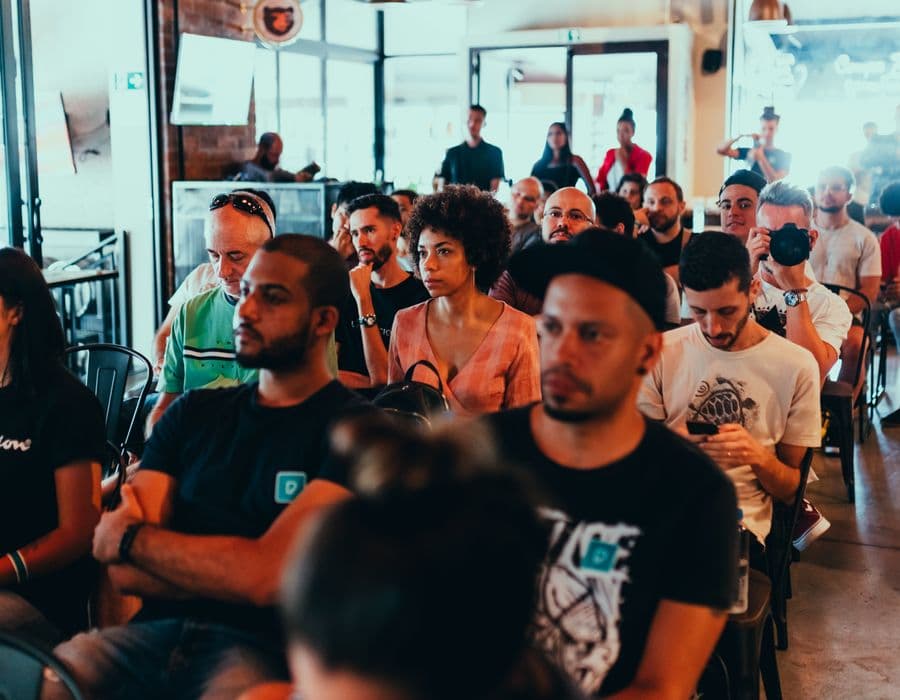
A community is not a list of users. It is not a mass of registered profiles. It is not an audience to reach with notifications, content and commercial messages. A community arises when people recognise a common principle and agree to take part in the quality of the environment they inhabit.
For Epinexa, community means a belonging governed by trust, respect, quality and contribution. The user is not only a consumer. The professional is not only a provider. The company is not only a client. The platform is not only an intermediary.
Everyone takes part in the quality of the ecosystem. This is the point: Epinexa is not built only to receive value, but to generate it together.
A community is measured not only by those who enter, but by what everyone contributes to safeguard.
An audience observes or consumes. A community takes part, recognises rules and contributes to the quality of the common place.
A database accumulates contacts. A community builds qualified relationships, trust and shared memory.
Epinexa does not seek passive enthusiasm. It seeks adult, aware participation, coherent with the manifesto.
The community has value when it preserves differences of role, expertise and need, but connects them within a common pact.
A wellbeing community needs a stronger pact than a simple registration. In wellbeing, relationships can touch personal questions, fragilities, expectations, expertise, reputation, professional journeys and trust. This is why Epinexa cannot build a community founded only on interaction.
A common grammar is needed. Good faith orients the way of taking part. Trust protects the relationship. Selection makes expertise more recognisable. Privacy safeguards what must not become merchandise. Responsibility prevents the community from turning into noise.
The pact does not serve to make the community rigid. It serves to make it inhabitable.
To take part means to act with correctness, measure, respect and attention towards those who seek, offer or organise wellbeing.
Every relationship must contribute to strengthening the common environment, not to exploiting its vulnerability.
The quality of the ecosystem also depends on who enters, how they communicate and what responsibility they accept.
The community must respect data, digital identity and personal boundaries, especially in a delicate field such as wellbeing.
A serious community does not flatten roles. At Epinexa, each subject takes part in a different way and carries a specific responsibility. The user brings attention, trust and awareness. The professional brings expertise, seriousness and continuity. The company brings organisational responsibility. The partner brings vision, collaboration and systemic contribution. The platform brings method, accessibility, tools and protection of the environment.
This distinction is important. If everyone is treated in the same way, the community becomes confused. If every role is recognised, the ecosystem becomes more readable.
People who seek guidance, content, professionals and clearer journeys, within an environment founded on trust. Responsibility: to take part with awareness, respect and attention to the quality of their own journey.
Selected figures who offer expertise, content, journeys, consultations and professional relationship. Responsibility: to communicate with measure, respect the person, safeguard trust and contribute to the reputation of the ecosystem.
Organisations that want to build corporate well-being journeys that are more serious, accessible and continuous. Responsibility: to promote wellbeing without control, paternalism or purely decorative initiatives.
Associations, institutions, networks and actors who can contribute to culture, events, content, territories and development. Responsibility: to collaborate coherently with the manifesto, the method and the quality of the project.
The platform enables tools, journeys and connections, but above all safeguards the coherence of the pact. Responsibility: to make trust, privacy, accessibility and selection visible in the behaviour of the ecosystem.
For professionals, the Epinexa community must be much more than a space of visibility. It must become an environment in which expertise, reputation and collaboration can generate new possibilities.
Many wellbeing professionals work alone, communicate alone, manage different tools and compete in a market where aggressive simplification often prevails over quality. A qualified community can reduce this solitude, but only if it is governed by criteria.
Epinexa must offer a professional space where exchange, collaboration, events, content, journeys and belonging are not random, but coherent with the manifesto.
Encounter between different competences, without turning the community into an arena of self-promotion.
The possibility to build content, events, journeys, programmes or initiatives together with other professionals.
The quality of the environment also strengthens the credibility of the individual professionals who belong to it.
Being part of Epinexa means inhabiting a selected professional context, not appearing in an indistinct list.
For users, the Epinexa community must offer a different feeling from the generic web. Not a place where everything is available but nothing is truly orderly. Not a continuous flow of promises, advice, content and profiles to interpret alone. Not a social network where visibility decides what appears most credible.
The community must help the person orient themselves. This means finding more readable content, selected professionals, clearer journeys, events, resources and possibilities of relationship within an environment that declares criteria and protects trust.
The user must not feel pushed. They must feel accompanied to understand better.
The community helps the person not to cross the noise of digital wellbeing alone.
Professionals, content and journeys are presented within a more orderly and readable frame.
Selection and the manifesto make more recognisable the difference between a qualified context and an indistinct offer.
The user is not the object of continuous conversion. They are a person who must be able to understand, evaluate and choose.
For companies, the Epinexa community can become a useful context to build more credible corporate well-being journeys. Workplace wellbeing does not live only in purchased activities or organised workshops. It also lives in the culture that supports them: words, criteria, professionals, content, privacy, continuity and responsibility.
A qualified community can help companies not treat wellbeing as an isolated initiative. It can offer access to professionals, journeys, events, content and more coherent visions. It can also become a place of dialogue between organisations that recognise in wellbeing a responsibility, not only a benefit.
Epinexa must communicate this possibility without promising an automatic solution. The community does not replace corporate culture. It can, however, help it evolve.
A qualified community makes access to professionals, content and initiatives more solid.
Corporate well-being needs words, criteria and continuity, not only episodic activities.
Companies and partners can exchange on common themes: prevention, privacy, leadership, personal sustainability.
Taking part in a serious ecosystem can strengthen the coherence between what the company declares and what it makes accessible.
Epinexa wants to speak a great deal to women, but it must do so with intelligence. It is not enough to place female images at the centre, use softer tones or build an aesthetic “for women”. That would be a simplification and, in the long run, a positioning mistake.
The centrality of women at Epinexa must emerge in a deeper way: capacity for relationship, daily responsibility, care that is not rhetorical, professional expertise, leadership, listening, organisation, systemic vision. Women must be represented as subjects who choose, lead, evaluate, build, educate, care, work and decide.
The community can become a space in which these dimensions are not trivialised, but recognised as adult forms of authority.
The representation of women must show capacity for choice, evaluation and responsibility, not decorative fragility.
Epinexa must give value to female professionals, trainers, consultants, entrepreneurs and guiding figures.
Relationship is not sentimentalism. It is social intelligence, organisational capacity and responsibility towards the context.
The community can give space to a vision of wellbeing that is more integrated, less aggressive and more aware.
To maintain quality, the Epinexa community must have rules of good participation. They must not appear as rigid prohibitions, but as conditions of inhabitability. Every shared environment needs care: language, respect, transparency, responsibility, attention to data, quality of content and recognition of limits.
In wellbeing, these rules are even more important. An excessive word, an unsustainable promise, an improper piece of advice or commercial pressure can produce real damage to trust.
The rules do not serve to switch off the community. They serve to make it safer, more adult and more credible.
Avoiding absolute promises, manipulative tones, miraculous language or content that exploits vulnerability.
Users, professionals, companies and platform take part in different ways. Roles must be recognised, not confused.
Participation must respect privacy, digital identity and personal boundaries.
Every piece of content, interaction or proposal must strengthen the trust of the common environment.
Epinexa must also be clear about what its community does not want to become. It does not want to be a promotional group, a fanbase, a showcase for continuous self-promotion, a disguised directory, an internal social network without criteria or a space where every piece of content has the same weight.
This clarity serves to protect the quality of the project. In wellbeing, a community too open to noise risks weakening what it says it wants to build. If everything is allowed, trust dilutes. If everything is communication, the relationship impoverishes. If everything is visibility, expertise becomes invisible again.
The Epinexa community must grow, but not at any cost.
Epinexa does not seek superficial consensus, but responsible participation.
The community must not become a place where everyone pushes offers, services or content without criteria.
Interaction and content have value only if they contribute to guidance, trust and quality.
Value must not depend on who speaks the most, but on who contributes the best.
The community is open to the entry of people, professionals, companies and partners coherent with the spirit of the ecosystem. It is not an indistinct community: it grows within a pact of trust, quality and responsibility.
The platform enables tools, access and journeys. The community concerns the quality of relationships, the sense of belonging and the shared responsibility among those who take part in the ecosystem.
Yes, but participation must be coherent with rules of respect, quality and good faith. The user is not only a consumer, but part of the common environment.
Yes. One of the functions of the community is to foster exchange, collaboration, content, events and journeys, always within shared criteria.
Yes, if they take part with responsibility and coherence. Companies can contribute through corporate well-being journeys, events, projects and dialogues oriented towards the real value of people.
Because it recognises in the feminine perspective an important dimension of relationship, care, expertise, organisation and responsibility. This attention must not become a stereotype, but a quality of language and representation.
No. The community must not become a board of self-promotion. Visibility has value only if it remains coherent with trust, expertise and responsibility.
Entry depends on the role: users, professionals, companies and partners have different journeys. The Contact page and the dedicated pages help you choose the correct entry point.
A community is not inhabited as a spectator. It is built with responsibility.